Part 1 of 2
Chapter 1 - The Keys
By Zakes Mdluli
1,358 words · 5 min read
Listen to this chapter
Narrated · 10 min
CHAPTER 1: THE KEYS
Thandeka Zungu's first morning at Hadebe Capital began with a cold geyser, a burnt slice of toast on the pavement, and Kabelo loading the last thing he owned into the boot of his Polo Vivo: the television she had helped him buy.
“You can keep the mugs,” he had said, as if that made him generous.
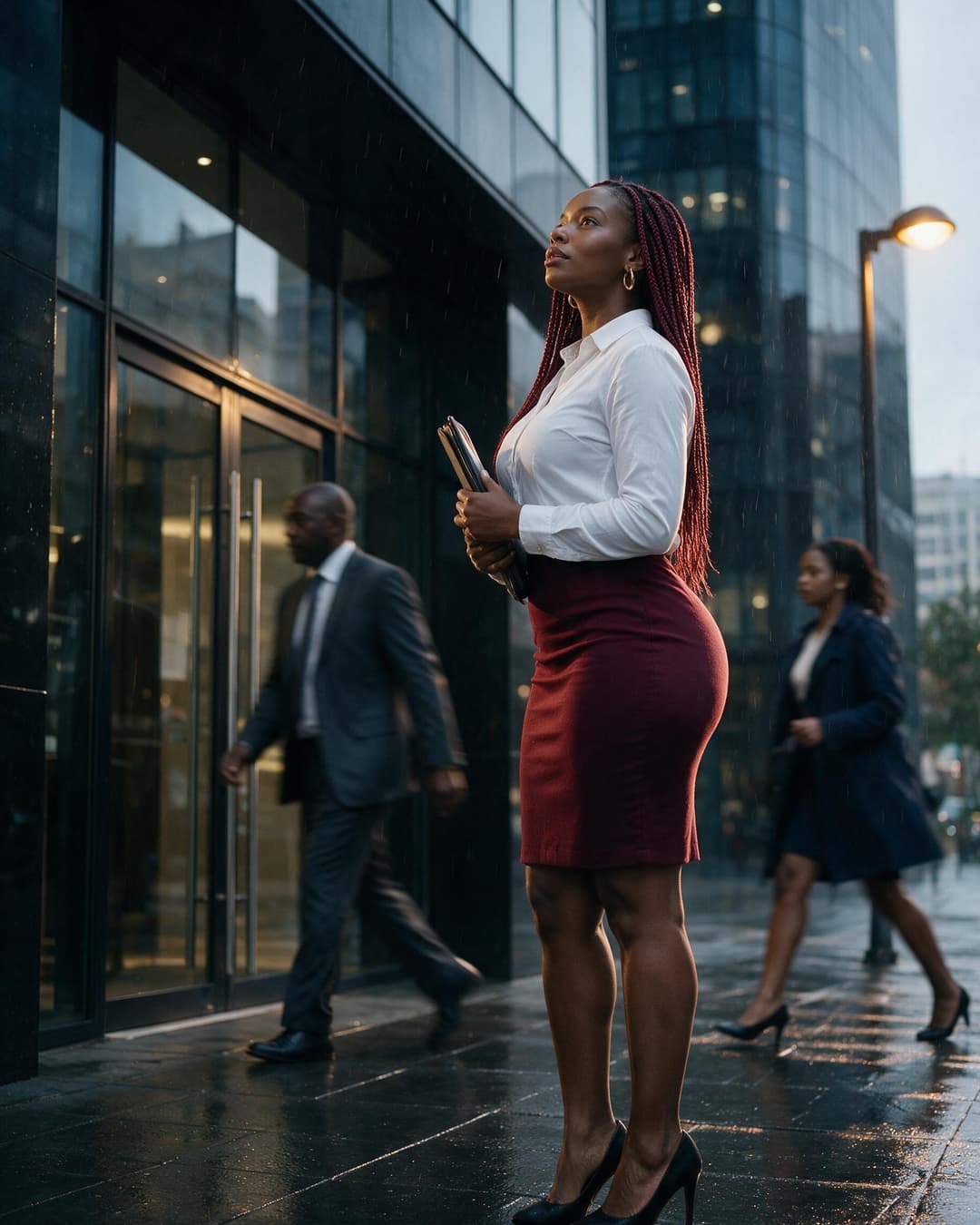
By the time she came up from Sandton Gautrain station, rain had turned the paving stones dark and shiny. An old man beneath the station awning watched her hurry past in a white blouse, black pencil skirt and heels that were already taking in water.
“One of those days, sisi?” he called.
Thandeka gave him the R20 in her handbag. “You have no idea.”
Ahead of her, Hadebe Capital rose in black glass against the wet Johannesburg morning, all sharp edges and silent money. New job, no boyfriend, new life, she told herself. The words did not land as bravely as she needed them to.
The lobby smelled of rain on expensive stone and someone’s clean citrus perfume. A woman with a severe low bun and a black tablet tucked against her chest stepped in front of her.
“Thandeka Zungu?”
“Yes.”
“You’re the new personal secretary.” The woman looked at her with faint, tired pity. “I’m taking you to Mr Hadebe’s floor. Ask my name again in a few weeks, neh. If you are still here.”
The lift opened on a silent executive level. Through the glass walls, people in dark suits moved between boardrooms with the hard purpose of people who believed minutes could be bought. Thandeka’s desk stood outside two walnut doors, facing the Johannesburg skyline.
At exactly nine, the intercom clicked.
“Is someone there?”
The voice was deep, patient only by force.
“Yes, Mr Hadebe.”
“Come in.”
She checked herself in the dark window. Her long wine-red knotless braids were still damp at the ends. Her blouse was neat. Her lip gloss had survived. She looked like a woman who could begin again.
“Now, Ms Zungu.”
The intercom had no camera she could see. Still, she opened the doors at once.
Sizwe Hadebe was not a man who disappeared inside a room. The office had been built to impress—rare books, a leather seating area, a wall of glass turning the city into a private possession—but he filled it anyway. His navy suit sat cleanly over broad shoulders. A close-trimmed beard sharpened the set of his mouth. Silver touched his temples without making him seem older; it made him look more dangerous.
“Your name?” he asked.
“Thandeka Zungu, Mr Hadebe.”
“When I call, you come immediately. Do you understand?”
“Yes, Mr Hadebe.”
He read her CV, then sent a task list that would have swallowed three people’s day before lunch. When she brought a double espresso an hour later, she heard his raised voice through the half-open door.
“Cape Town is not the issue, Nomusa. Taking my children there with that man is.”
She should have turned around. Instead she knocked softly and entered.
Sizwe ended the call with his hand pressed to his forehead. The anger had gone out of him, leaving something rawer. Thandeka set down the cup.
“I’m sorry. I did not mean to hear.”
“You were not meant to.” He took a measured sip. “The past few months have been difficult.”
She should have gone. Instead she said, “I understand difficult. My boyfriend left this morning. He took the TV because apparently the friend I shouldn’t have worried about is prettier and has a better job.”
Sizwe looked up properly then. The coldness in his eyes eased.
“That says more about Kabelo than it does about you.”
Warmth climbed Thandeka’s throat. “Thank you.”
“Finish the proposal before you leave. You’ll need to work late.”
She glanced at the rain rinsing down the glass. There was no one waiting at home, no television, no reason to rush back to an empty flat.
“That will be fine.”
His mouth made the smallest movement. “Good.”
For the next hour, Thandeka worked with a kind of vicious concentration. She corrected a figure in the proposal, caught a missing attachment before it could embarrass the firm, and learned the rhythm of Sizwe’s intercom: one short click for an instruction, two for a question he expected answered before she had opened the door.
At seven, the severe woman from reception reappeared to collect a forgotten charger. She stopped when she saw Thandeka still at the desk.
“First day?”
“First day.”
The woman looked toward the walnut doors, then back. “He can be difficult. But he notices work. That is not nothing around here.”

Before Thandeka could ask her name, the lift arrived. The woman was gone again, leaving only the soft close of its doors and Thandeka’s reflection in the black glass.
She did not know whether she was staying because she needed the money or because Sizwe had looked at her as if he could see the part of her that had been left behind in Kabelo’s flat. The difference unsettled her. She forced herself to finish the numbers anyway.
At half past six, the office emptied. The sound of heels and low voices disappeared into the lift lobby. Thandeka drank weak coffee from a paper cup and tried not to think about Kabelo’s empty side of the bed.
The intercom clicked again.
“Ms Zungu. Please come in.”
Please. The new word made her look up.
Sizwe stood by the leather couches, jacket removed, shirt sleeves folded to his forearms. He asked whether everyone had gone. When she nodded, he looked past her to the quiet glass office outside.
“You have heard things about this job,” he said.
“People have opinions.”
“And yours?”
“That you expect too much and dislike being disappointed.”
He almost smiled. “Honesty. I value it.” He crossed to a recessed cabinet and unlocked it.
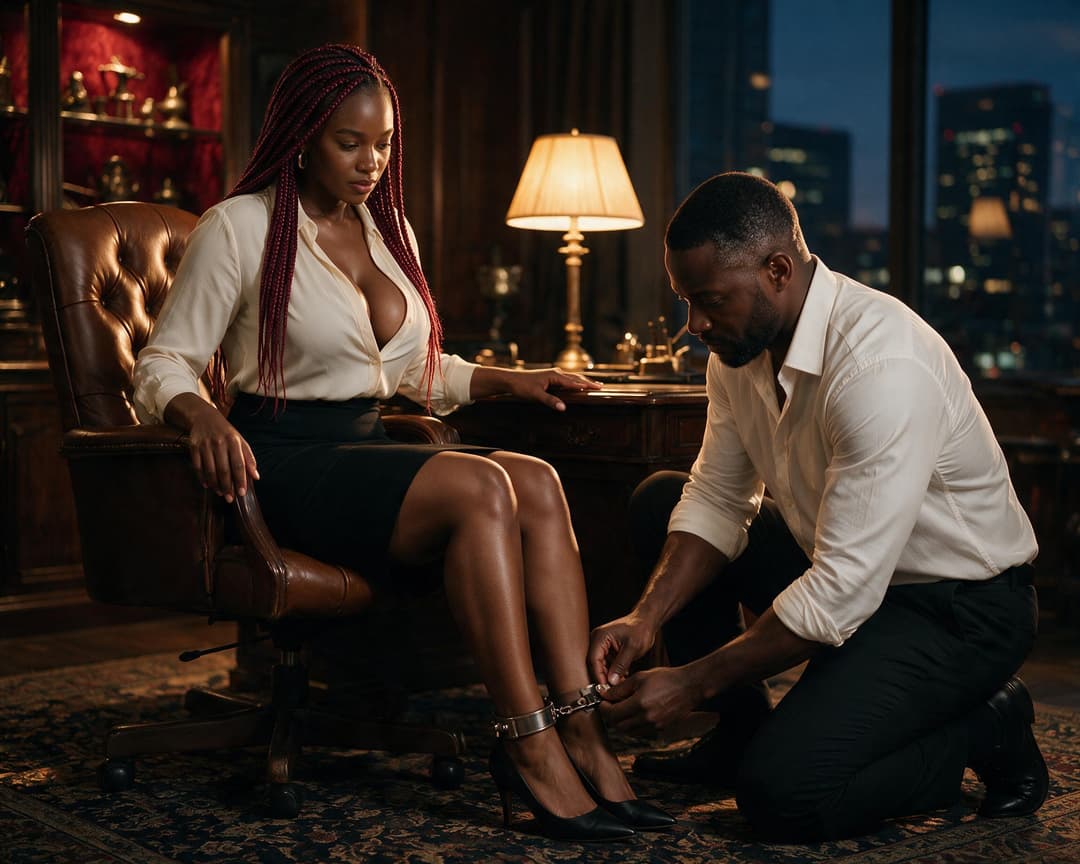
Inside, against red velvet, were cuffs, soft leather restraints, a polished collar, a paddle, and chains that caught the low office light.
Thandeka’s mouth went dry.
“Late work can become… ritual for me,” he said. “A structure. I require my personal secretary to wear restraints while we work after hours.”
The sentence landed heavily. She thought of the job she needed, the rent waiting, the way her first day had stripped every other certainty from her. Then she thought of the careful way he was watching her, as if her answer mattered more than the thing he wanted.
“Is it sexual?”
“It does not have to be.” His voice stayed level. “Nothing happens because you work for me. If you say no, you leave with the job untouched. If you say yes, you can stop tonight at any time. I will remove everything myself.”
Her pulse fluttered against her throat. The clean, expensive scent of his cologne had followed her all day; sandalwood, rain, something warm beneath it. She should have been frightened. She was frightened. Yet another feeling moved underneath it, bright and shamefully alive.
“Only while we work late?”
“Only then. During the day, I am Mr Hadebe. In private, you may call me Sizwe—or master, if that is what you choose.”
Thandeka stared at the cuffs in his hands. A locked door had just appeared inside her, and she could not decide whether she wanted to run from it or open it.
“I want to try,” she said.
He came down in front of her, not touching her until she gave a small nod. The ankle cuffs closed with quiet clicks. A light chain left her enough room to walk, but not enough to forget it. Then he fastened the cuffs at her wrists, the chain between them long enough for a keyboard.
“Too tight?”
“No.”
His thumb rested briefly against the inside of her wrist. “You are still in charge of your yes.”
The words should have steadied her. Instead they made the heat under her skin deepen.
“Back to the proposal,” he said, standing. “We will be here all night otherwise.”
Thandeka looked down at the steel bright against her brown skin, then up at the man holding the key.
“Yes… master.”