Part 1 of 4
Chapter 1 - Patience
1,018 words · 4 min read
Listen to this chapter
Narrated · 7 min

PART 1: PATIENCE
"Sisi. You own the mop. You don't have to hold it."
Mapule slid the file across the desk like it had personally offended her. Four complaints in nine weeks. All of them nights. All of them the 14th floor of Marais & Dube — the client that paid for everything, the contract that was forty percent of Mokoena Facilities Group.
"Discipline the night team," Mapule said. "That's what a normal MD does."
"And if it's not the team?"
"Sisi. You and I started out cleaning these buildings together — Discovery, 2011, same shift, same trolley. So hear me as your oldest friend, not your ops manager: you're not that woman anymore. You're the MD. Send someone else."
But Thandeka trusted her own eyes. Everything else was a report.
The Polo Vivo she kept for nights like this smelled of pine cleaner and old vinyl. In the parking lot across from the tower, she pinned the name tag above the left pocket of the teal tunic. White plastic. Black capitals. PATIENCE.
Her mother's middle name. The only part of the uniform that wasn't a lie.
Her mother had cleaned buildings like this for thirty years. Three taxis from Tembisa in the dark, three taxis back in the dark, and hands that told the whole story — Handy Andy and hot water and other people's mess. Thandeka had sworn she'd buy her way out of that uniform, and she had. She'd bought the whole company.

Eleven years since she'd worn one for real, and her hands still knew where everything went. That was the thing she never said out loud, not even to Mapule. The uniform didn't feel like a costume.
It felt like going home.
"Sawubona, Baba."
"Yebo, sisi." The guard slid the register across without looking up. J. NKABINDE, said his badge. She signed in as Patience Dube and took the service lift up through the smell of floor polish and recycled air.
The 14th floor was spotless. That was the first problem.
The complaint dated 19 March said the boardroom hadn't been touched. Her supervisor's log said it was signed off at 21:15 that same night. She worked through it carefully in her head: one of those two pieces of paper was lying. And the floor itself backed the log. So she kept that in her teeth.
Then she saw the light.
One office at the far end of the dark floor. A man inside it, sleeves rolled, tie long gone, eating peri-peri chicken over his keyboard like a student in a very expensive shirt.

He didn't do the thing men in suits do, which is look through you. He looked at her. Properly.
"You're new. Nights?"
"Nights." She kept the trolley between them. "Patience."
Something moved across his face when she said it. Not quite a smile. Like the word had landed somewhere she couldn't see.
"Khaya." He wiped his hand on a serviette and didn't offer it, which she appreciated more than she expected to. "I'd say welcome, but it's nearly midnight and we're both still here, so. Condolences."
He found her again an hour later, in the cleaners' kitchenette on 12, stirring Frisco into a chipped mug.
He stood in the doorway like he'd caught her stealing. "You're drinking Frisco. At eleven o'clock at night."
"It works."
"It's a crime, is what it is. Come. The machine upstairs makes real coffee — it's wasted on us, honestly."
The exec floor smelled different. That was the thing nobody told you about money: it had a smell. Warm, roasted, clean. Nothing like the ammonia bite that lived in her gloves. He worked the espresso machine like it was a colleague, and Thandeka stood in a stranger's kitchen wearing her mother's name while a man she'd known for an hour made her the best coffee she'd had all year.

He talked while the machine breathed. Not at her — to her. The building. The guard downstairs — "Joseph. Ask him about Orlando Pirates, but only if you've got an hour." Where was home? Tembisa, she said, which was true. The cover worked best when she fed it true things.
Then, half to himself, he started complaining about a deal eating his week. A supplier squeezing payment terms. Pushing the rate.
"Then fight the escalation clause, not the rate," she said, before she could stop herself. "The rate is the headline. The clause is where they'll bleed you."
The machine finished. The silence didn't.
"Where did you learn that?"
"I clean offices." She took the cup from his hand without letting their fingers touch. "People talk like we're furniture."
He looked at her a moment too long. Cedar, his cologne, and something green underneath. She catalogued it the way she catalogued everything, and then was annoyed with herself for it.
"You're not furniture," he said. Quietly. Like a correction he'd been waiting to make.
She drank the coffee so she didn't have to answer. It was, infuriatingly, perfect.
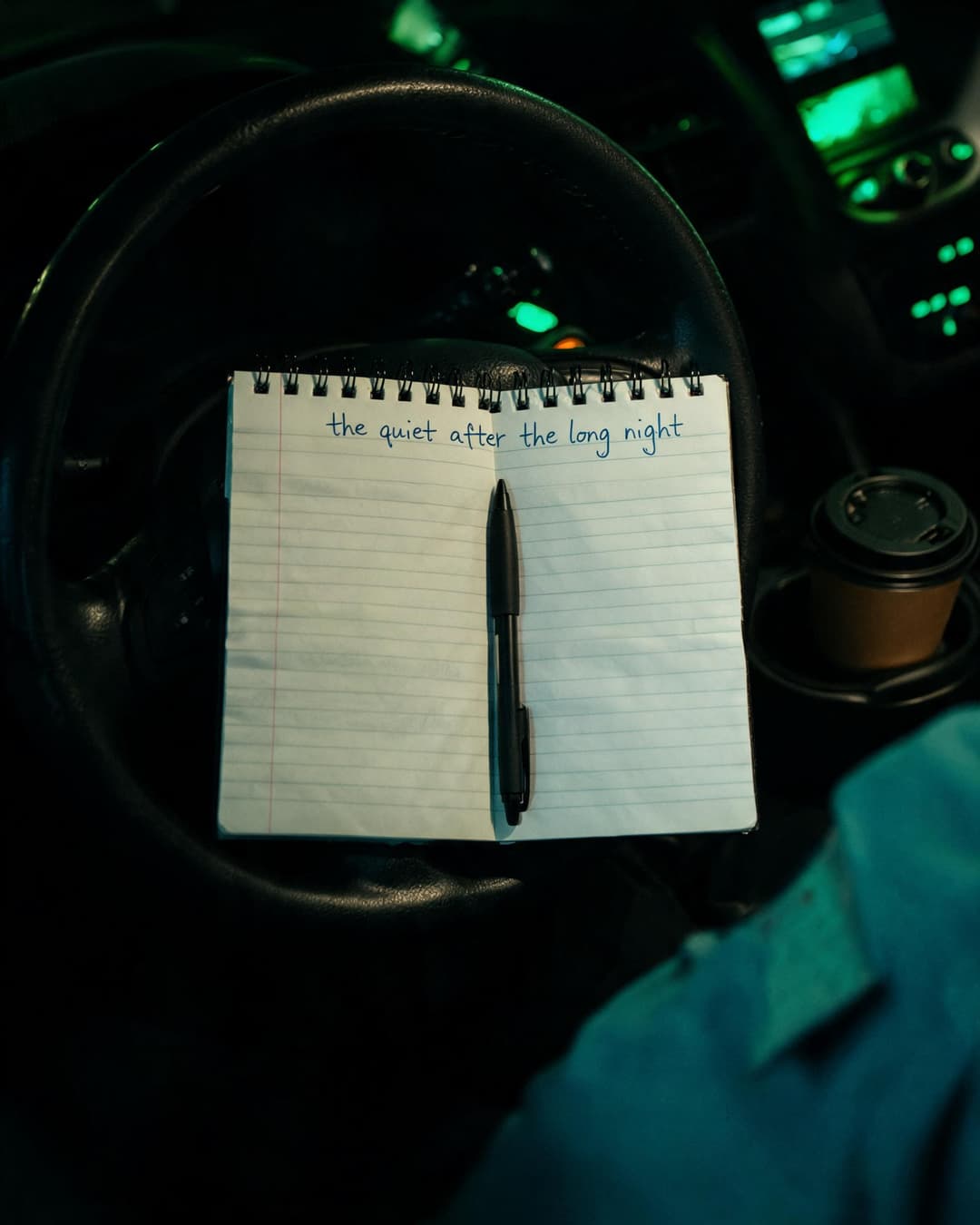
At 00:40 she sat in the Polo with the audit notebook open against the steering wheel and worked through it slowly.
The client's complaint said the boardroom wasn't cleaned on the 19th of March. Her own supervisor's log said it was — signed off at 21:15, initialled. One of those two pieces of paper was lying. And after tonight, she knew it wasn't the log: she'd gone over that floor herself, centimetre by centimetre, and the work was good. Better than good.
So she wrote: Pull the other three complaints. Check each one against the shift logs. If those dates don't match either, the problem isn't my cleaners — someone is complaining about work that was done.
She underlined the last part twice. Then she sat for a moment with what it meant. A false complaint isn't a standards problem. A false complaint has an author.
Three more audit nights, she told herself, pulling out onto an empty Rivonia Road. That part was even true.
What she didn't write down was that she was already looking forward to them.
That should have been the first warning.