Part 1 of 3
Chapter 1 - The Bar In Middelburg
By Zakes Mdluli
1,817 words · 7 min read
Listen to this chapter
Narrated · 12 min
CHAPTER 1: THE BAR IN MIDDELBURG
Four days before Christmas, I sat alone at a bar in Middelburg and tried not to look like a woman who had been left for Mauritius.
It was a proper Highveld December evening: the air still hot from the afternoon, a storm threatening somewhere beyond the windows, the place cool only because the air-conditioner was fighting for its life. My parents' street was five minutes away, full of lights strung over security walls and aunties who would ask why I had come home without Lwazi before I got both feet through the front door. I had told Mama I needed an hour. She had given me the look that said she knew exactly what kind of hour I meant.
Lwazi had called five days earlier, his voice soft and guilty, to explain that the woman he called his platonic best friend had an unexpected opening on a Mauritius holiday. A year together had apparently not been enough to stop him taking it. I had told him to enjoy the beach. Then I had put down the phone and stared at my Sandton flat until it felt like somewhere I had been evicted from.
At least at home I could be miserable with better lighting.
My parents would disagree with the miserable part. They believed every problem in my life had a solution, preferably one they could name before breakfast. Living in Sandton was too far. Working in fashion was a beautiful little hobby that had somehow run on for years. Being single at twenty-eight was a concern they discussed in lowered voices when they thought I could not hear. Lwazi had been a compromise they could understand because he had a good family and a handsome smile, even if they never trusted a man who made clothes for a living.
They would be thrilled to learn he had gone to Mauritius with somebody else. Not because they were cruel. Because they would feel vindicated, and vindication from people who love you can feel a lot like being picked apart with a blunt knife.
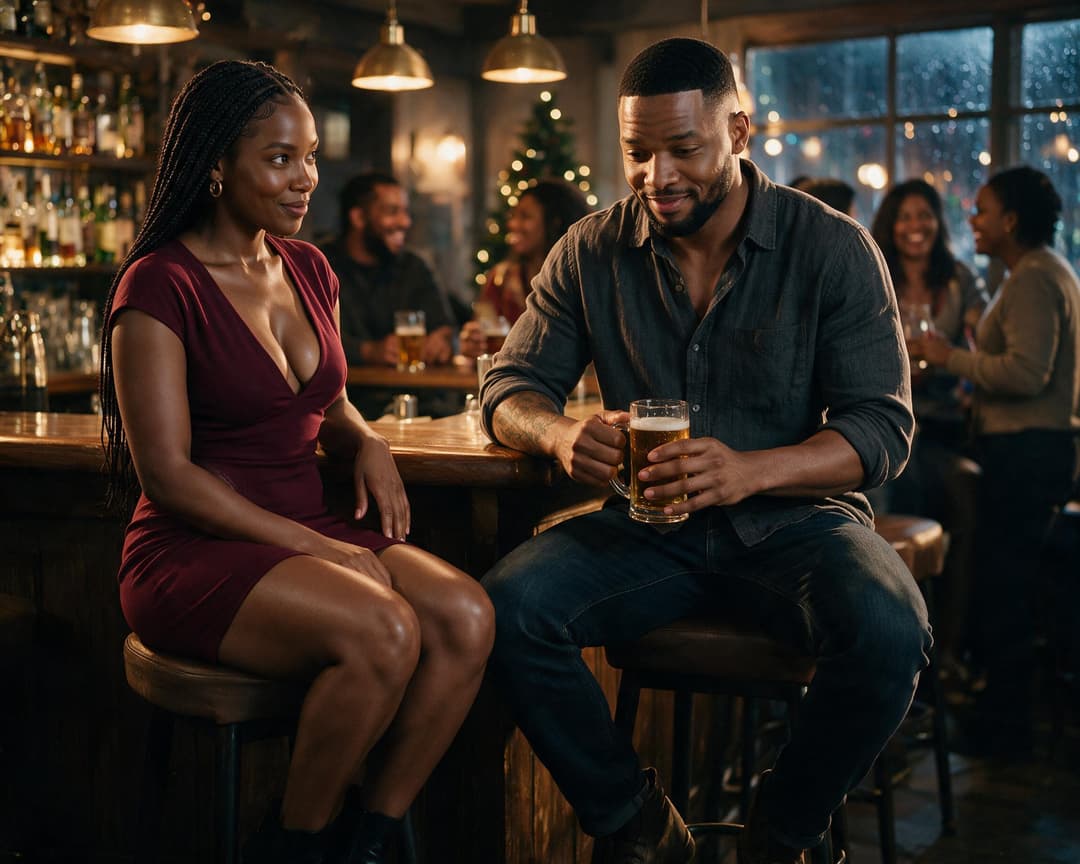
So I sat at the bar in the dress I had worn for nobody, sipping gin and telling myself that one quiet night without advice was not too much to ask. The place had only been open six months. It had velvet stools, low amber lamps and a cocktail list long enough to make every old uncle in Middelburg complain about the prices. It was not the kind of bar I remembered from growing up. It felt almost like Sandton, if Sandton had a thunderstorm rolling over the roofs and people who knew your parents.
I nudged my empty gin cocktail towards the barman and asked for another. The only open stool in the crowded room was beside mine. When a tall man stepped in from the pavement, a little rain darkening the shoulders of his charcoal shirt, I knew exactly where he was headed.
He was the sort of man who looked out of place in a room designed for selfies and expensive drinks. Dark denim. Worn leather boots. A shirt with sleeves rolled to his elbows, showing a dense botanical tattoo climbing one forearm. He looked like he had spent the day in a roof space, or fixing a gate, or doing something useful with his hands. Not like he belonged under pendant lights with men who wore loafers without socks.
Then he turned his face towards me and my stomach dropped hard enough to hurt.
Mind if I sit here? he asked.
His voice was low and rough, familiar in a way that made no sense.
I nodded because I had forgotten what words were for.
He sat. His knee almost touched mine under the narrow bar. The barman set my drink down and the stranger ordered a Castle Lite. He smelled clean under the rain, like soap and cedar and something warm that made me want to lean closer just to find its name.
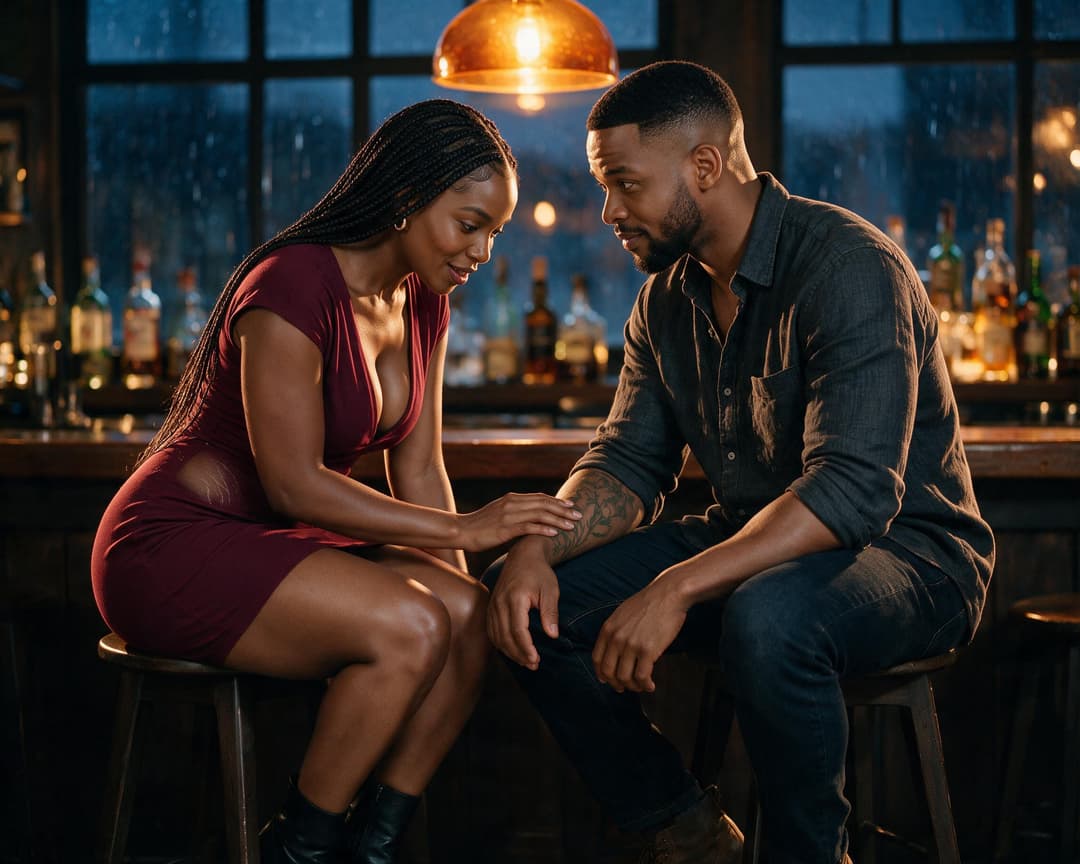
Up close, he was worse. Better. His beard was trimmed close against a square jaw; his eyes were so dark they looked almost black beneath heavy brows. The tattoo on his arm was not the crude kind of thing I expected from a man in boots. It was leaves and stems and small precise flowers, all black ink and patient detail. His shirt pulled across his shoulders when he reached for his beer. My body noticed before my mind had agreed to notice anything.
I had come out to be alone. I had told myself I did not want another man looking at me as if I were a problem he could solve for the night. But this man was not smiling like he had already won. He looked as unsure of the room as I felt. That small resemblance made him dangerous.
That is a good beer, I said, because the alternative was admitting I had been looking at his mouth.
It is my usual, he said. Then he glanced at my drink. Gin and something pink. Looks dangerous.
Only if you are fragile.
That brought a small smile to his face. It changed him. Suddenly he looked less like a man who knew how to repair a broken lock and more like trouble that had learnt to wear a watch.
Khaya had known it was Thando before he crossed the room.
He had stood in the doorway for a second too long, rain cooling the back of his neck, looking at the woman he had not seen since matric and trying to fit her to the girl from next door. The hair was different. Her body had softened into a womanly shape that made every thought in his head useless. But the eyes were exactly the same: dark, clever, too direct when she forgot to protect herself.
He had spent the afternoon in his parents' roof space, dragging down boxes of Christmas decorations because his father refused to climb ladders anymore. He had come to the bar for a quiet beer and found the one person who could make a quiet beer feel like a test.
She did not recognise him.
That should have stung. Instead it made him curious. Seven years was enough for people to change. He had changed from a lanky boy who played rugby, football and cricket when he was not studying into the investment director who spent his weeks in Sandton meeting rooms. Maybe she expected the old version. Maybe he had expected her to stay exactly as he remembered too.
What do you do? he asked, then cursed himself inside for making it sound like a line.
Thando gave him a side-eye that told him she had heard it as one.
I produce fashion shows, she said. The actual work. The schedules, the makeup teams, the models, the disasters nobody sees because I solve them first.
That sounds harder than most jobs.
Her expression changed. A small crack in the guardedness. People normally hear fashion and assume I play with pretty things.
I know enough to see the work in your dress. The tailoring is good.
She looked down at the burgundy dress, then back at him. You know tailoring for a handyman?
The laugh that escaped her was small, but Khaya remembered it. He remembered Thando laughing once from behind the hedge between their houses when he had dropped a cricket ball over the wall. He remembered a girl with a schoolbag too heavy for one shoulder, hurrying past his gate as though she had somewhere important to be. He had been too shy then to do more than watch. Now she was sitting beside him in a dress that made every decent thought feel thin.
He asked about the shows she ran, and she answered despite herself. She told him about models arriving late, lighting rigs that refused to work, designers who wanted a storm built inside a ballroom and then acted surprised when rain damaged the floor. The more she spoke, the more her shoulders loosened. She was good at it. Better than good. Her hands moved when she explained a problem, making a small stage in the air between them.
Khaya told her only that he worked in investments. He did not say director. He did not say Sandton, not yet. He wanted one hour where she was not measuring him against a title or a suit. He wanted to know whether the easy conversation belonged to who they were now or to the fact that he had known the curve of her smile before either of them had learnt what to do with it.
He let his smile widen. I have been known to fix a few things.
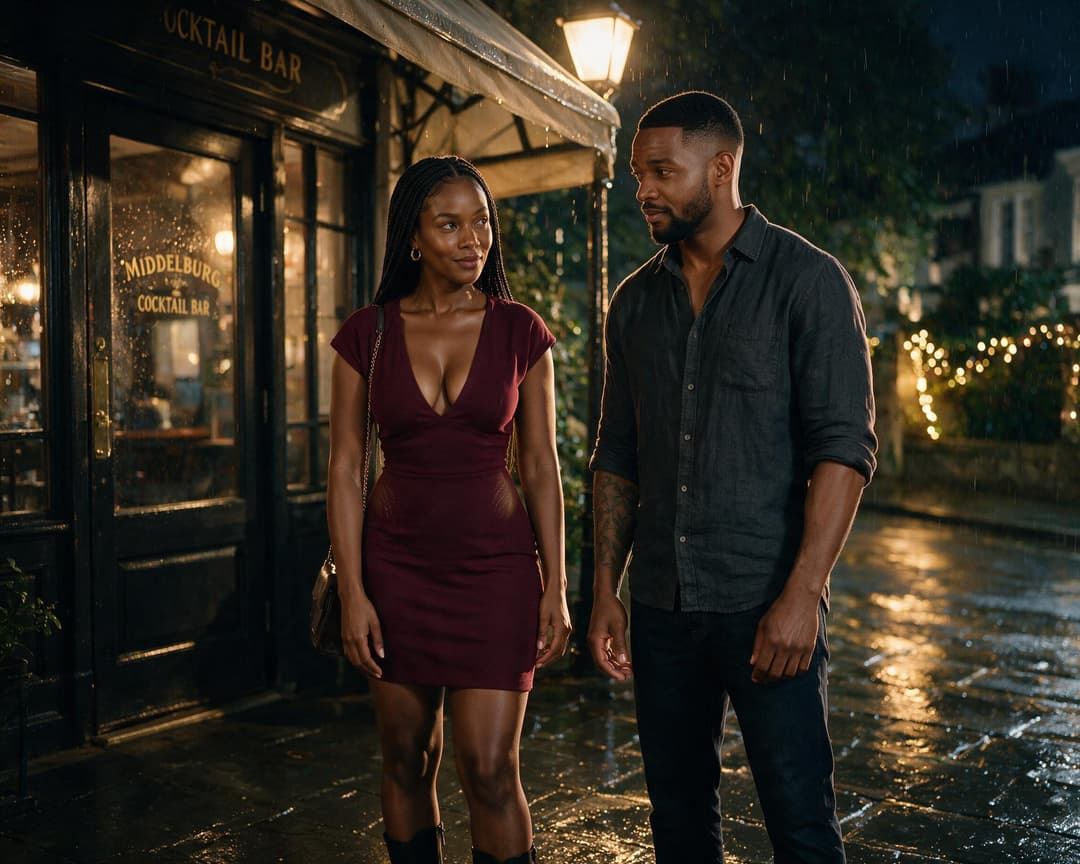
When he rolled the other sleeve higher, her gaze landed on his tattoo. Her fingers moved before either of them seemed to decide it. She traced one leaf near his wrist, barely touching him.
Sorry, she said quickly, pulling away. That is beautiful.
It is only art, he said. You can look.
Her cheeks warmed. The colour rose beautifully against her caramel skin. He wanted to tell her that. He wanted to tell her he had noticed her in every school corridor, that he had watched her leave early for a job at a salon and imagined a life big enough for her plans. Instead he drank his beer and let the conversation find its own rhythm.
They talked for an hour. About the absurdity of parents who wanted children to become finance people. About the strange intimacy of coming home at Christmas and finding every old version of yourself still waiting in the cupboard. About the rain beginning to needle the windows.
Thando told him she had never been good at casual things. She said it like a complaint against herself, then looked embarrassed for giving a stranger that much truth. Khaya did not tease her. He only said that casual was overrated when it made people pretend not to care. Something in her face went still at that.
By then the second drink had softened the sharpest edge of her heartbreak, but it had not made her careless. When he offered to walk her home, he asked twice if she was sure. When she said yes, he paid for his beer and stepped aside to let her choose the door first. The courtesy should not have felt so intimate. It did.
Thando laughed properly at one of his bad jokes. It was not a polite sound. It came from her chest, surprised and generous. Khaya felt it settle somewhere behind his ribs.
When the barman called last drinks, she looked towards the door. He saw the choice arrive in her face before she made it.
She could go home to the questions. Or she could stay.
There was no doubt about it. She was staying.